Open Floor Plan Furniture Arrangement: Zone Strategies That Transform Any Space
An open floor plan hands you something rare in interior design: a blank canvas at architectural scale. No walls forcing the sofa against a specific surface. No separate rooms dictating function by square footage. Just a generous, light-filled expanse where you get to decide exactly how each zone lives and breathes. The key to making it work is a clear zoning strategy, applied through rugs, furniture placement, lighting, and intentional traffic flow. This guide walks through every principle of successful open floor plan furniture arrangement so your space feels cohesive, purposeful, and genuinely beautiful.
Rugs as Anchors: The Most Powerful Zoning Tool You Have
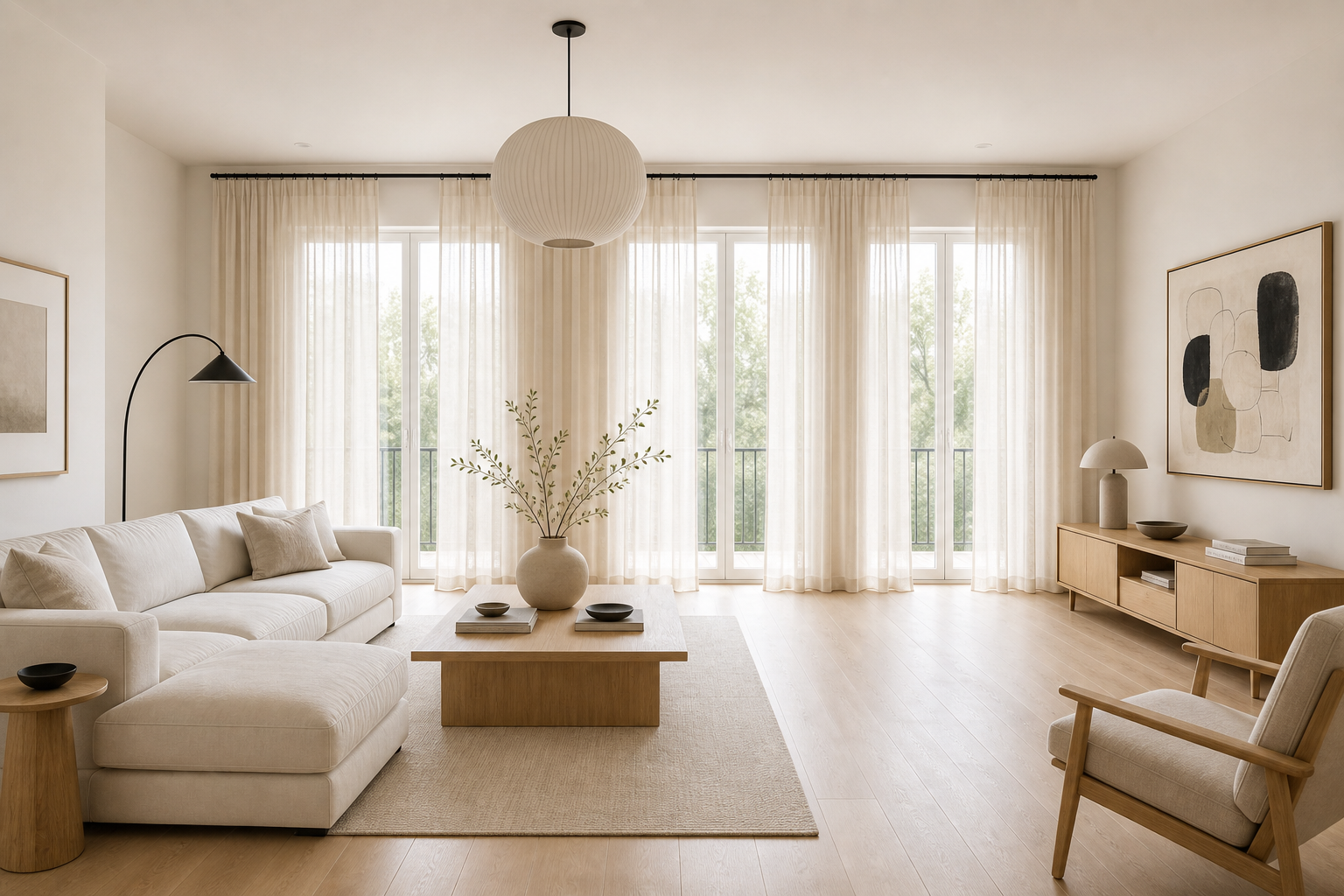
Area rugs are your most effective tool for defining a zone in an open floor plan. A well-placed rug signals: this is a room within the room. Every piece of furniture in that zone relates back to the rug beneath it, creating visual coherence where there are no walls to do that work for you.
For a living zone, size determines success. A rug that is too small makes the seating arrangement look accidental. The minimum for a floating seating group is 8x10 feet; 9x12 is ideal in most open plans and allows all four legs of every sofa and chair to rest on the rug surface.
Product Pick
SAFAVIEH Kilim Collection Area Rug, 9' x 12', Beige & Ivory, Handmade Wool Handmade wool construction brings texture and warmth that synthetic rugs cannot match. The beige and ivory palette works across both zones without visual competition and pairs naturally with natural wood tones and warm metals.
For the dining zone, size the rug so that chairs remain on it even when pulled out from the table. A 6-foot dining table calls for a rug of at least 9x12. Choosing a patterned rug for one zone and a solid or subtly textured rug for the other adds a layer of visual distinction between the two areas.
The Floating Sofa Strategy: Pull Away From the Walls
Pulling the sofa away from the wall is the move that transforms an open floor plan arrangement. This approach may feel counterintuitive, particularly in a wide space where the instinct is to keep furniture at the perimeter. But a sofa pushed against a wall in an open plan creates a disconnected, waiting-room quality. Floating furniture creates intimacy, defines zone boundaries clearly, and makes the living area feel genuinely inhabited rather than incidental.
Position the sofa so it defines the "back wall" of the living zone, even if that places it two or three feet from an actual wall. The negative space behind the sofa becomes a natural circulation buffer and visual frame for the seating group.
For a floating arrangement to read as intentional, the sofa needs a finished back: an upholstered rear panel that looks polished when viewed from behind.
Product Pick
Hokku Designs Tofu Wabi-Sabi Straight Sofa The clean, straight profile and intentional wabi-sabi aesthetic float naturally in an open plan center. With a structured back that reads polished from every angle and understated upholstery, this sofa works as a room-defining piece, not just seating.
Configuring the Living Zone: Sofa, Chairs, and Coffee Table
With the sofa floating, the rest of the living zone follows a single guiding principle: arrange seating to encourage conversation. Position furniture so that the natural eye line and body orientation draws people toward each other rather than toward a wall.
A standard living zone configuration for an open plan includes a sofa (seating three), two accent chairs opposite or flanking the sofa, and a coffee table centered in the arrangement. This loose U-shape or rectangle of seating creates an enclosed, gathered feeling even in a wide-open space.
The coffee table should sit 12 to 18 inches from the sofa's edge, close enough to reach comfortably and set a drink or book down without stretching, while leaving enough clearance to stand and move through the zone naturally.
Product Pick
Slab Faux Travertine Coffee Table The faux travertine stone top adds organic texture and visual weight that grounds the living zone. The slab form leaves clear paths around the arrangement and pairs with natural materials throughout the open plan.
Configuring the Dining Zone: Table Sizing and Placement for Open Plans
In a traditional dining room, four walls guide table placement almost automatically. In an open plan, you have more creative freedom and more responsibility for making the zone feel complete. The dining table needs to be sized for both the people it serves and the visual weight of the zone it anchors.
For most open plans, a 60-inch to 72-inch rectangular or oval table hits the right proportion. Round tables work beautifully in open plans for four-person seating; they soften the geometry and create a more conversational atmosphere. Avoid tables with bulky aprons or wide skirts, as these interrupt the visual flow across the open plan.
Center the dining table within its zone rather than against the kitchen or a wall. Leave at least 36 inches of clearance on all sides so people can pull chairs out, stand, and circulate freely.
Product Pick
Natural Oak Contemporary Modern Dining Table, 82.7"L At over 82 inches, this table provides generous seating in a large open plan without a heavy apron or skirt interrupting the sightlines. The natural oak finish brings warmth and sits proportionally in any wide-open space.
Traffic Flow: The 36-Inch Clearance Rule
Open floor plans are thoroughfares. People move through them constantly, circulating between the kitchen, dining zone, living zone, and exit points. The professional standard for comfortable pedestrian flow is 36 inches of clearance at every path's narrowest point.
Map every circulation route through your plan: kitchen to dining table, dining table to sofa area, entry to kitchen, living zone to bedroom hallway. Walk each path mentally (or physically). Every route should allow two people to pass each other comfortably or one person to move without turning sideways.
Where the current arrangement creates a pinch point, the solution is usually simpler than a full rearrangement. Moving the coffee table two inches closer to the sofa, rotating the accent chairs slightly inward, or repositioning the dining chairs can open a blocked path. Consistent 36-inch clearance throughout your open plan is what gives the space its sense of generosity and ease.
Tips for Large Open Plans: Handling Loft-Style and Extra-Wide Spaces
When an open plan exceeds roughly 500 to 600 square feet, a standard two-zone arrangement can begin to feel isolated. Furniture floats in the middle and the room's perimeter looks unresolved. A few targeted strategies address scale effectively.
Add a third zone. A reading nook with a wingback chair, floor lamp, and small side table in one corner creates a third distinct area that fills the room without a significant investment.
Use an open bookshelf as a soft zone divider. A freestanding open bookshelf positioned perpendicular to the sofa creates visual separation between zones while maintaining light and sightlines across the open plan.
Product Pick
YOFE 70.87 in. Black 5-Shelf Bookcase with Metal Frame The metal frame and open-back design create zone separation between living and dining areas without blocking light or sightlines. The vertical industrial presence marks the boundary clearly while staying visually airy. Style with books, plants, and objects for a layered look.
Scale up your anchor pieces. In an extra-wide open plan, a standard 9x12 rug may not be sufficient. A 10x14 rug grounds an oversized living zone and prevents the seating group from looking marooned in the center of the floor. Similarly, consider a larger dining table (extending to 84 or 96 inches) to match the room's proportions.
Lighting as Zone Definition: Pendants, Floor Lamps, and the Power of Vertical Layer
Lighting is one of the most underused tools in open floor plan furniture arrangement. Strategic fixture placement signals zone boundaries just as clearly as rugs and furniture configurations, and it operates vertically, adding a dimensional layer that floor-level elements cannot achieve on their own.
Two lighting moves define most open plans clearly and elegantly.
Pendant Light Over the Dining Table
A pendant or chandelier hung directly over the dining table creates a visual "ceiling" for that zone. It declares, without walls: this is the dining area. For standard ceiling heights, the pendant should hang 28 to 34 inches above the tabletop. Scale the fixture to the table: a 48-inch table calls for a pendant 20 to 24 inches in diameter.
Product Pick
Cyan Design Rockport 3-Light Aged Brass Cluster Globe Pendant Three globe pendants create stronger visual presence over a large dining table than a single fixture, making the zone definition more powerful. The aged brass finish bridges mid-century and contemporary styling and reads warmly against natural oak and stone surfaces.
Floor Lamp in the Living Zone
A floor lamp positioned beside or just behind the floating sofa creates a warm pool of light that gives the living zone its own atmospheric quality, distinct from the dining zone above. When both fixtures are on simultaneously, the contrast between floor-lamp glow in the seating area and pendant light over the dining table creates genuine spatial depth across the open plan.
Product Pick
Corrigan Studio Green Metals Glass Free Form Floor Lamp The sculptural free-form silhouette makes this lamp a design statement in the living zone. Positioned beside the floating sofa, it defines the seating area with both warm light and distinctive visual presence, creating genuine atmosphere distinct from the dining zone above.
Conclusion: Bring It All Together
Open floor plan furniture arrangement rewards a layered, deliberate approach. Each element builds on the one before it. Zone definition informs rug placement. Rug placement informs sofa positioning. Sofa position determines the living zone configuration. Traffic flow clearance runs through every decision. Lighting ties the layers together vertically.
When all of these elements work in concert, the result is a space that feels both expansive and intimate, curated and genuinely livable. The open plan stops being a design puzzle to solve and becomes what it always promised to be: the most generous, adaptable room in your home.
Ready to take the next step? Explore our [living room layout guides] for room-specific strategies, or browse our [interior design style guides] to find the aesthetic that fits your vision. Your open plan is the canvas. These strategies are your tools. Start anywhere and build from there.
Product pricing varies by retailer. Confirm current pricing before purchasing.